
Everlight:
Focus Journey
Designing a Gamified Productivity Experience That Rewards Focus
Project Overview
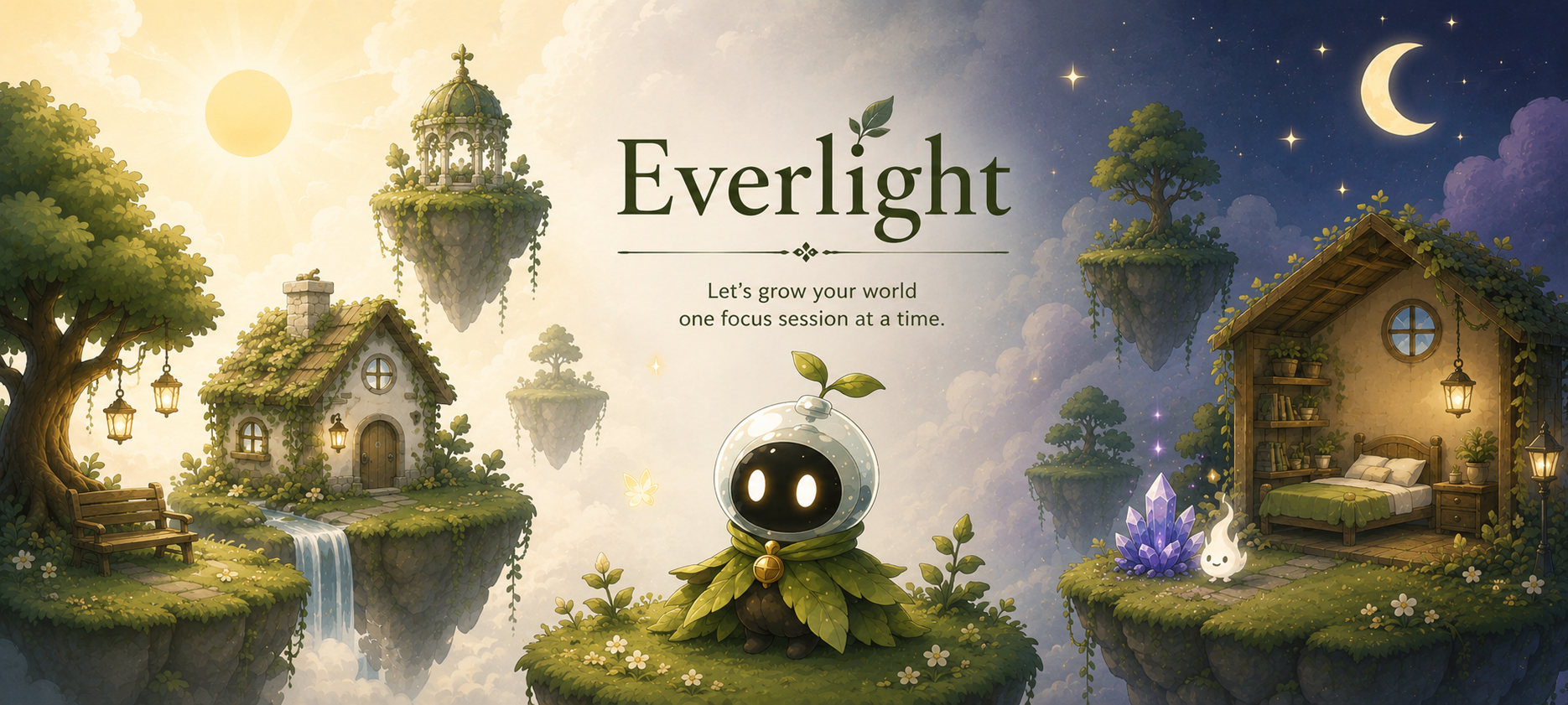
Everlight is a productivity and focus application that transforms everyday tasks into an immersive adventure. Rather than relying on traditional to-do lists and timers, the experience encourages users to build healthy habits by exploring a living world, collecting companions, and unlocking meaningful rewards through focused work sessions.
The challenge was to design an experience that balanced productivity with intrinsic motivation, helping users stay focused without introducing unnecessary complexity or distractions.
Objectives
Design an engaging productivity experience that encourages long-term focus habits.
Combine proven focus techniques with meaningful gamification.
Reduce friction when planning and completing tasks.
Create a scalable design system that supports future features and world expansion.
Build a calming, delightful experience that users genuinely enjoy returning to every day.
Role
Responsible for the complete product lifecycle, including product strategy, user research, UX, UI, interaction design, prototyping, usability testing, design systems, branding, and developer-ready specifications.
Duration
10 months
Design Process


1. Research
Research helped me understand the deeper challenges behind focus and productivity, not only how users manage tasks, but what causes them to lose motivation, abandon routines, or feel overwhelmed by traditional productivity tools.
Before moving into design, I created a structured research plan outlining the project goals, key questions, assumptions, methodologies, participants, and timeline. This ensured the process remained focused and allowed early product decisions to be grounded in genuine user needs rather than assumptions.
Research Goals
Understand how people currently manage tasks, focus sessions, and daily routines.
Identify the behaviours and frustrations that lead users to abandon productivity tools.
Explore how gamification, rewards, and visible progress influence motivation.
Define Everlight’s target audience and their core needs.
Analyse competing productivity and focus apps to identify opportunities for differentiation.
Assumptions
Users struggle to maintain consistent focus and productivity habits.
Traditional productivity apps can feel repetitive, demanding, or overly functional.
Visible progress and positive reinforcement can encourage long-term engagement.
Users prefer a simple experience that does not add more complexity to their routine.
Personalisation and meaningful rewards can strengthen users’ emotional connection with the product.
Methodologies
Primary Research: User interviews and user surveys.
Secondary Research: Market research, competitor analysis, behavioural psychology, and habit-formation research.
Evaluative Research: Concept validation and usability testing with interactive prototypes.
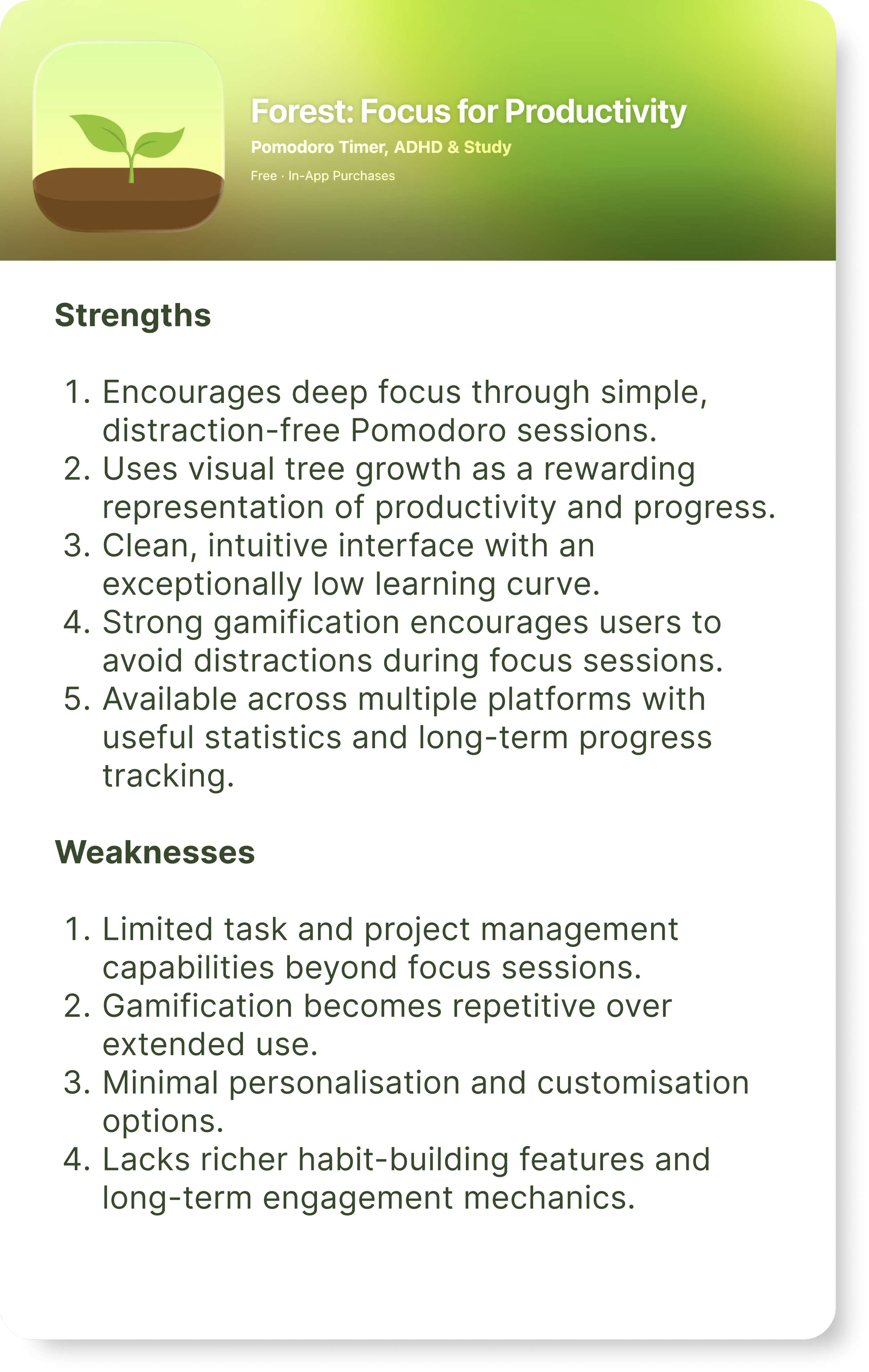
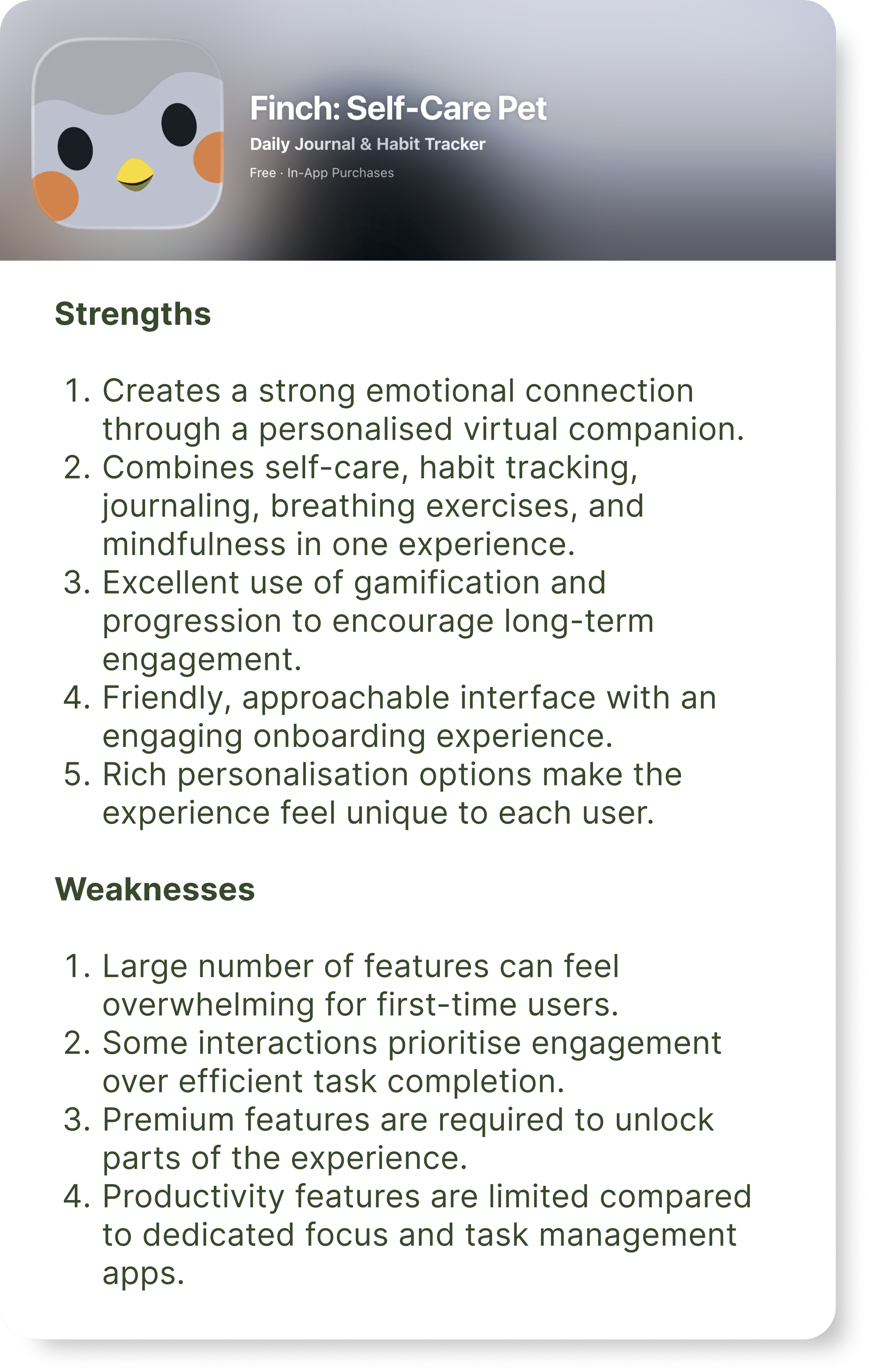
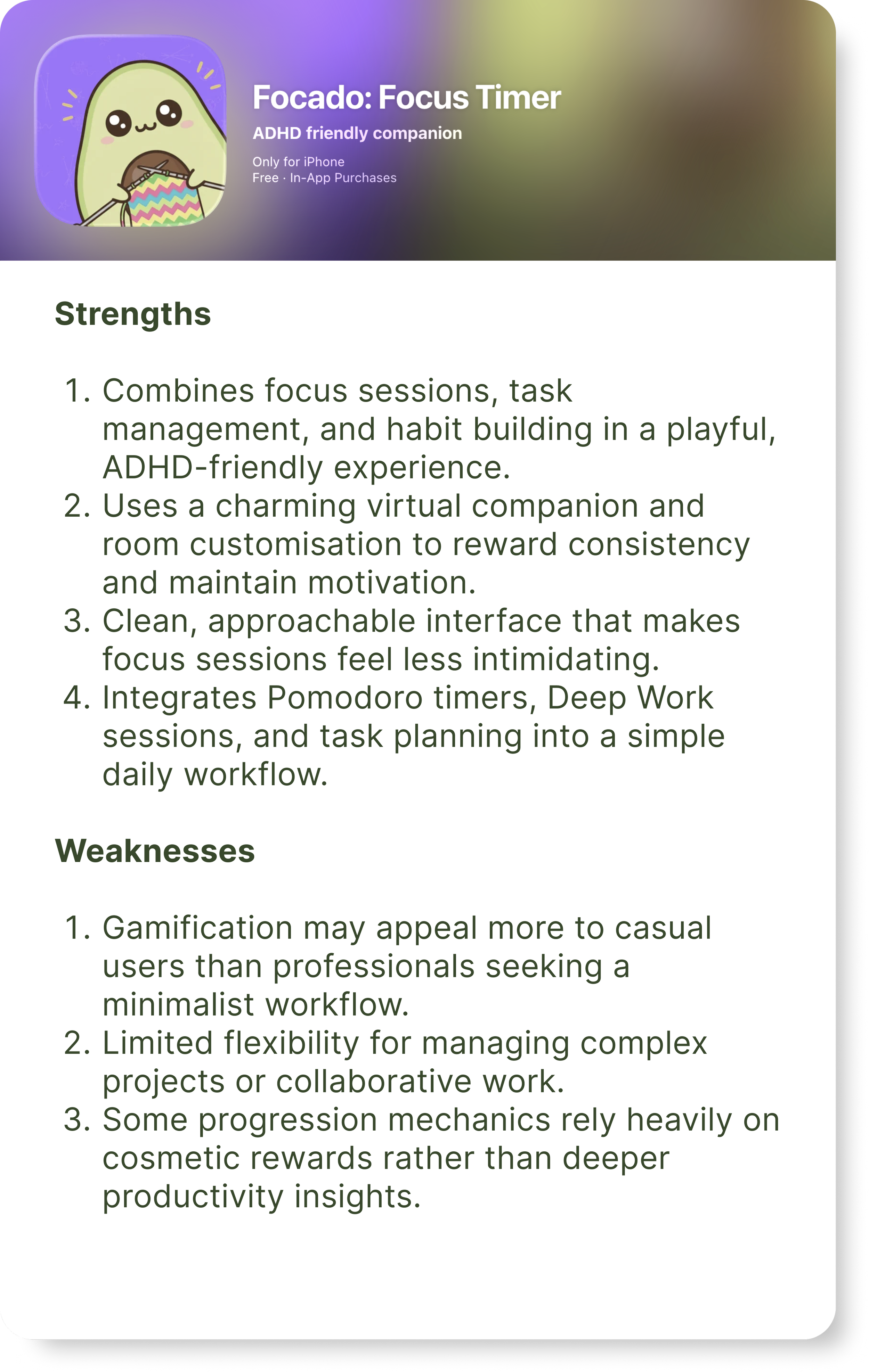
Competitors Research

Application Map
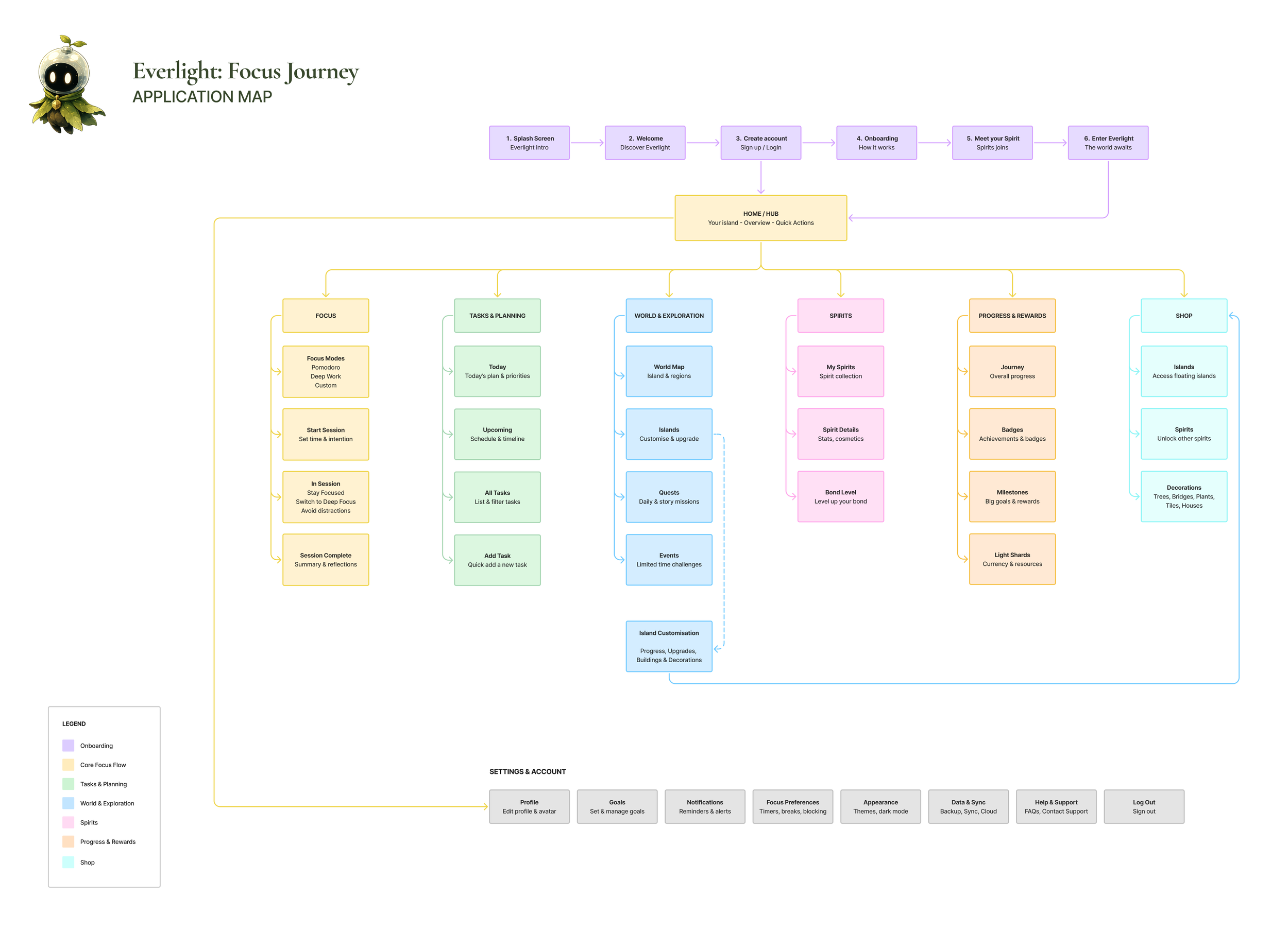
To establish a solid information architecture, I created an application map that outlined the entire product ecosystem and its core user journeys. Mapping the experience early helped define navigation, prioritise key interactions, and ensure users could move naturally between productivity tools, exploration, rewards, and personalisation.
It also served as a blueprint for future scalability, allowing new features and content to be introduced while maintaining a consistent and intuitive user experience.
User Interviews
To better understand the challenges users face when staying focused and maintaining productive routines, I conducted user interviews during the discovery phase. The objective was to explore existing productivity habits, identify pain points with current tools, and understand what motivates users to remain consistent over time.
I prepared an interview guide containing open-ended questions that encouraged participants to discuss their daily workflows, productivity struggles, experiences with focus applications, and the features they found most valuable. The insights gathered helped validate assumptions, uncover behavioural patterns, and shape Everlight's product direction.
A total of 8 participants with varying productivity habits and experience using focus or task management applications participated in the research.
Assumptions Validated
Users struggle to maintain consistent focus and productivity habits.
Validated. 8/8 participants reported regularly becoming distracted or losing motivation during work or study sessions.Traditional productivity apps often feel repetitive or uninspiring.
Validated. 7/8 participants described existing productivity tools as functional but lacking long-term motivation.Visual progression and meaningful rewards encourage habit formation.
Validated. 8/8 participants said they felt more motivated when they could clearly see progress or unlock achievements.Personalisation increases engagement.
Validated. 6/8 participants preferred applications that could be customised or reflected their personality.Users prefer a simple experience over feature-heavy interfaces.
Validated. 7/8 participants said they would rather use fewer, well-designed features than a complex interface with too many options.
2. Design
With the product strategy and research complete, I translated insights into a scalable product experience. Rather than focusing on individual screens, I prioritised defining core user journeys, interaction patterns, and a visual language that balanced productivity with playful gamification. The goal was to create an experience that felt motivating without compromising usability.
Wireframe & UI Design
I translated the core user journeys into high-fidelity wireframes and polished interfaces, focusing on usability, visual hierarchy, and interaction design. Every screen was designed to reduce friction, encourage focus, and make productivity feel rewarding through thoughtful micro-interactions and gamified progression.
Design System
To ensure consistency and scalability, I created a comprehensive design system consisting of reusable components, typography, colour tokens, spacing, iconography, and interaction patterns. This provided a strong foundation for future features while streamlining collaboration with developers.
Character Design
Nori was designed with a clear purpose: to strengthen the emotional connection between users and Everlight. Through an iterative design process, the character evolved into a friendly, expressive companion with a simple, recognisable silhouette that works consistently across UI elements, illustrations, and animations.
Integrated throughout onboarding, focus sessions, achievements, rewards, and world exploration, Nori reinforces the product's positive feedback loop by celebrating progress, encouraging consistency, and making productivity feel more engaging and rewarding.
Meet Nori
At the heart of Everlight is Nori—a curious little spirit who accompanies users throughout their productivity journey.
More than a mascot, Nori serves as Everlight's companion, bringing warmth, personality, and emotional connection to the experience. From welcoming users into the app to celebrating milestones and supporting focus sessions, Nori transforms everyday productivity into a journey that feels rewarding, motivating, and enjoyable.

UI Design
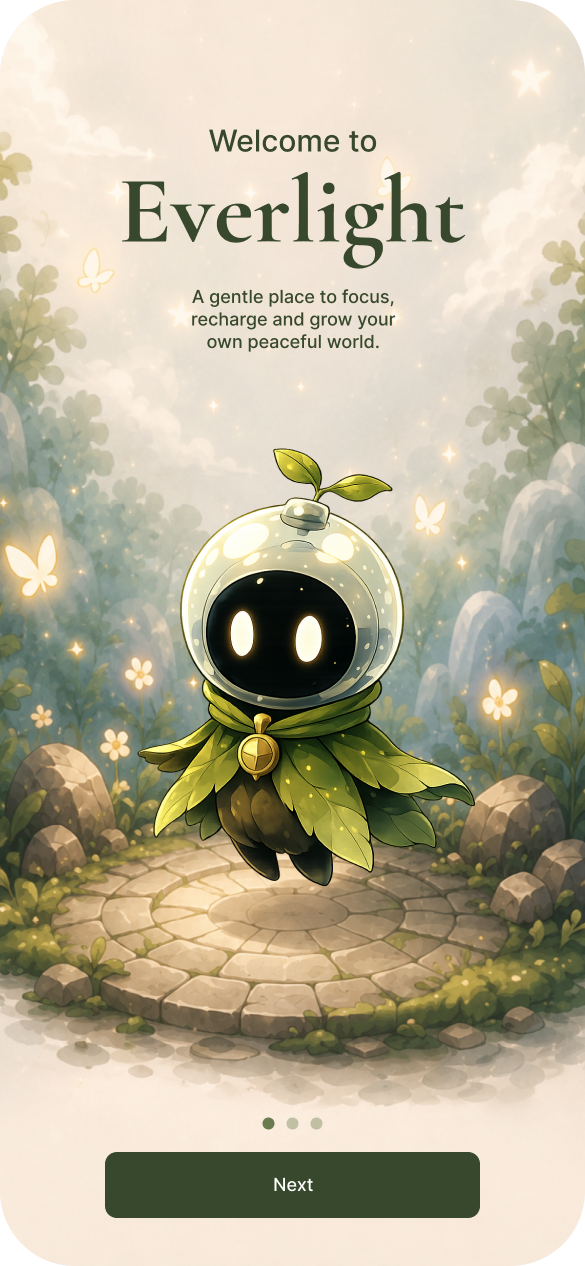
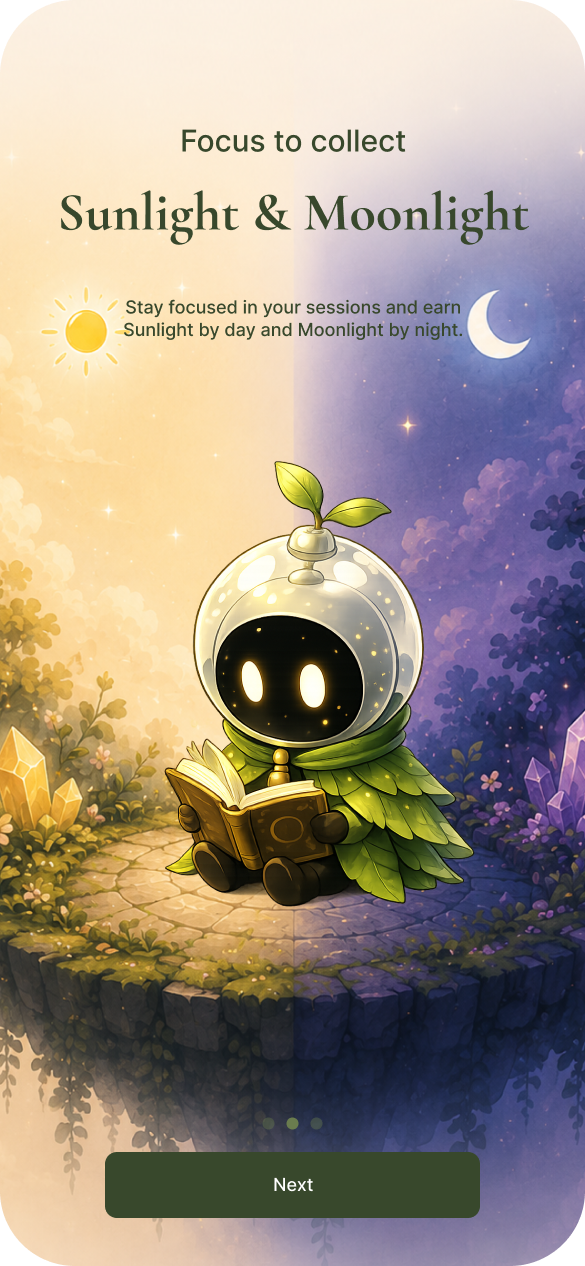
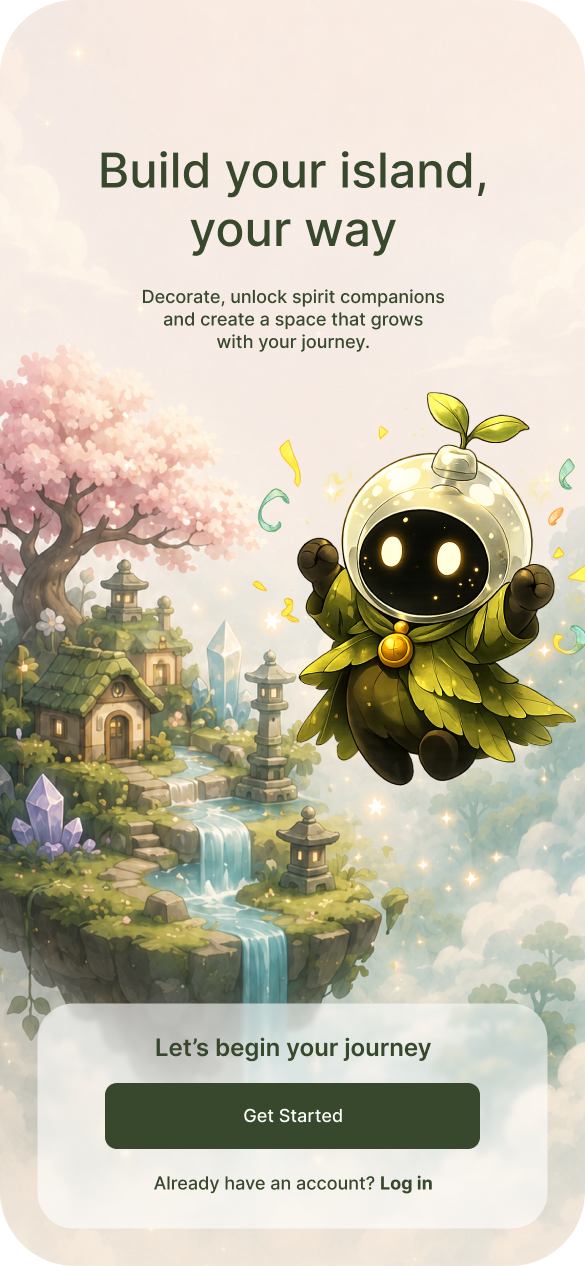
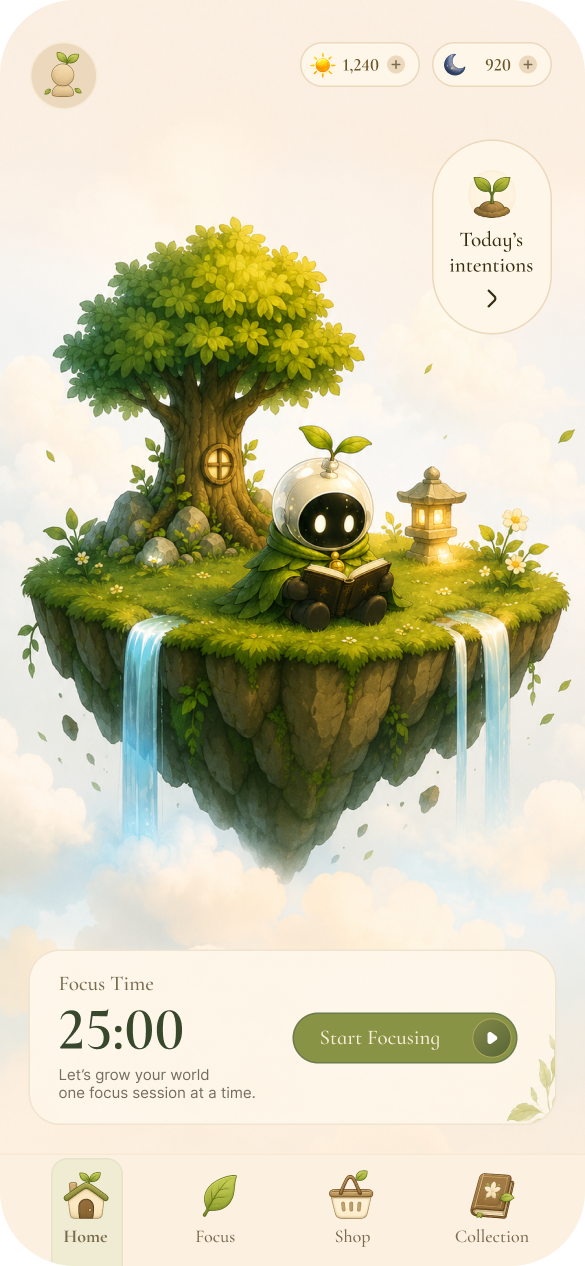
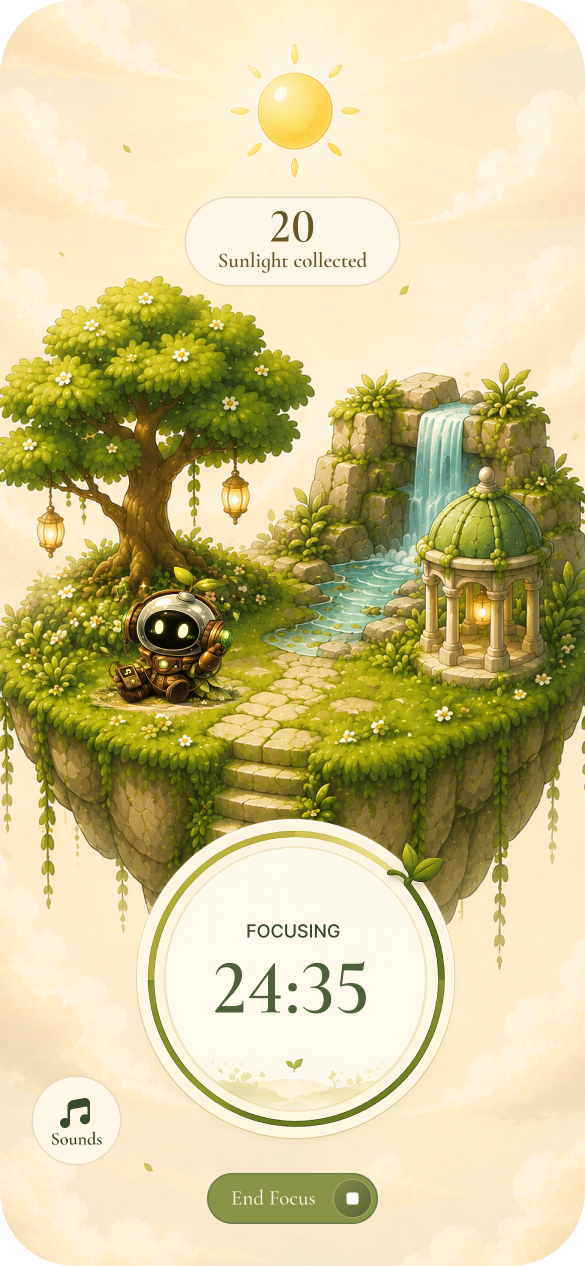
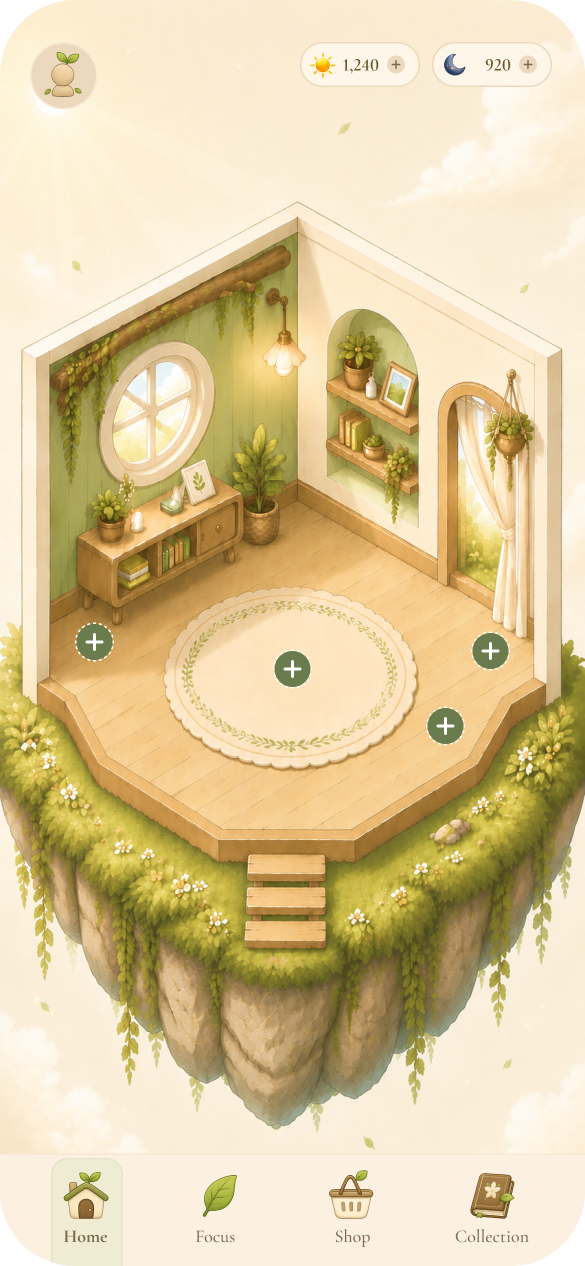
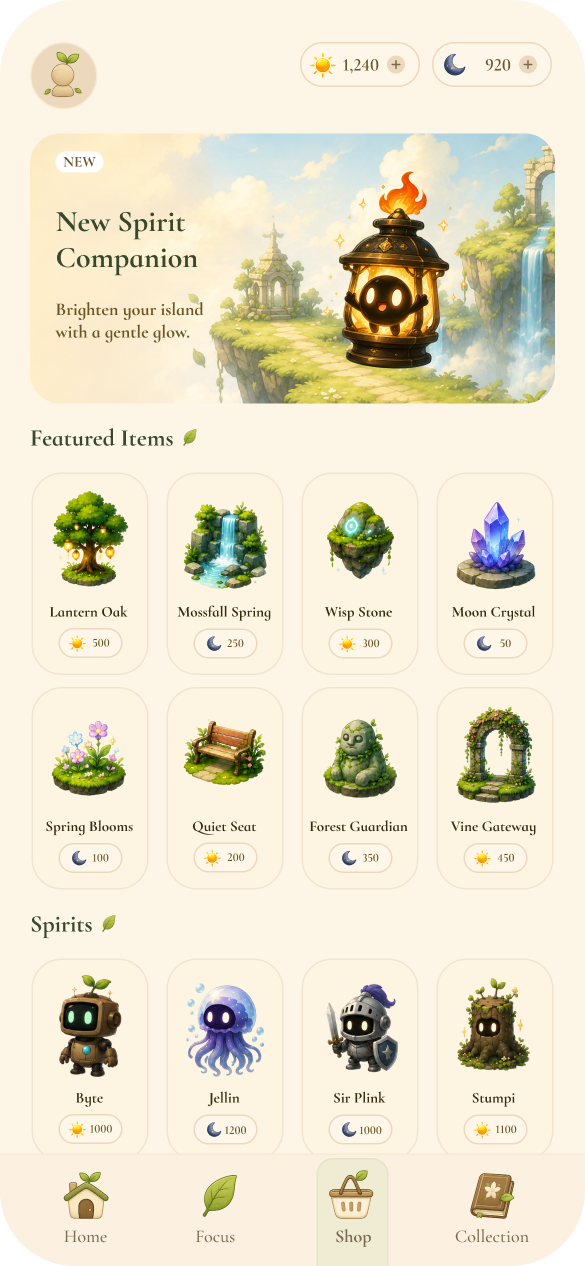
With the core user journeys defined, I translated the wireframes into polished, high-fidelity interfaces that balanced functionality with delight. Every screen was designed to make productivity feel approachable by combining a clean visual hierarchy with subtle gamification, rewarding interactions, and a calming aesthetic.
The interface was carefully crafted to minimise cognitive load while encouraging users to stay engaged through meaningful progression, world-building, and companion interactions. Particular attention was given to spacing, typography, colour, accessibility, and consistency to create an experience that feels both intuitive and immersive.
Throughout the design process, I continuously refined layouts, interaction patterns, and micro-interactions to ensure the product remained simple to use while supporting a growing ecosystem of features.
Design System
To ensure consistency across the product, I developed a scalable design system that established a shared visual language for Everlight. It provided a solid foundation for designing new features while maintaining a cohesive experience across the entire application.
The system was built using reusable components, design tokens, and clear interaction patterns, allowing interfaces to scale efficiently as the product evolves. Beyond improving consistency, it also streamlined collaboration with developers by providing production-ready specifications and reducing design duplication.
The design system included typography, colour foundations, spacing, iconography, buttons, inputs, navigation, cards, illustrations, companion states, and reusable UI components, ensuring every part of the experience felt unified and recognisable.
Design Principles
Consistency — Reusable components create a cohesive experience across every screen.
Scalability — Flexible foundations support future features, worlds, and product growth.
Efficiency — Standardised patterns accelerate design iterations and developer handoff.
Accessibility — Colours, typography, spacing, and components were designed with readability and usability in mind.
Maintainability — A structured component library simplifies future updates and long-term product evolution.
3. Prototype & Testing
High-Fidelity Prototype & User Testing
The interactive prototype enabled realistic usability testing across the product's key features and workflows. By observing users complete common tasks, I identified pain points, validated assumptions, and refined the experience before handoff to development.
Usability Testing
To evaluate the overall experience, I conducted moderated usability sessions using the interactive prototype. The objective was to understand how users interacted with Everlight, identify areas of friction, and validate whether the gamified experience supported productivity without becoming distracting.
During each session, I observed user behaviour, encouraged participants to think aloud, and documented moments of hesitation, confusion, and positive engagement. The findings helped prioritise design improvements before moving into development.
Key Findings
The sessions revealed several opportunities to improve the experience:
Users expected quicker access to active focus sessions from the home screen.
World progression became more engaging when rewards were introduced earlier.
Nori's role as a companion was immediately understood and positively received.
Navigation labels required minor refinement to improve clarity.
Users appreciated the calming interface and found the overall experience intuitive and motivating.
Design Iterations
Based on user feedback, I refined several areas of the product:
Simplified navigation and information architecture.
Improved visibility of active focus sessions.
Refined the reward and progression flow.
Enhanced visual feedback during interactions.
Strengthened Nori’s guidance throughout onboarding and key user journeys.
Improved consistency across layouts and interaction patterns.
Final Thoughts
Designing Everlight reinforced the value of creating products that balance functionality with emotional engagement. By combining user research, iterative design, usability testing, and thoughtful gamification, I developed an experience that helps users stay productive while making everyday focus sessions feel more rewarding.
Throughout the project, I worked across the entire product lifecycle—from defining the product vision and designing core user journeys to building a scalable design system, crafting Everlight's visual identity, and creating Nori, the companion that brings personality to the experience. Every decision was guided by user feedback and a commitment to creating a product that is both intuitive and enjoyable to use.
Everlight demonstrates my end-to-end product design approach, showing how research, strategy, interaction design, visual design, and storytelling can come together to create engaging digital experiences that support both user needs and long-term product growth.